
 By:
By: You sent the proposal. Now what?
You wait. Check email. Refresh. Wonder if they even opened it. Days pass. You send a "just checking in" message that makes you feel like a telemarketer.
Sound familiar?
This is the problem with traditional documents. They're black boxes. Once that PDF leaves your inbox, you have no idea what happens to it. Did they read it? Did they skim page one and close the tab? Did they forward it to their boss? Did it land in spam?
Document analytics changes that. Completely.
This is especially important in B2B deals where decisions usually involve groups, not individuals; multiple stakeholders reviewing different sections is normal behavior, not noise.
What Is Document Analytics?
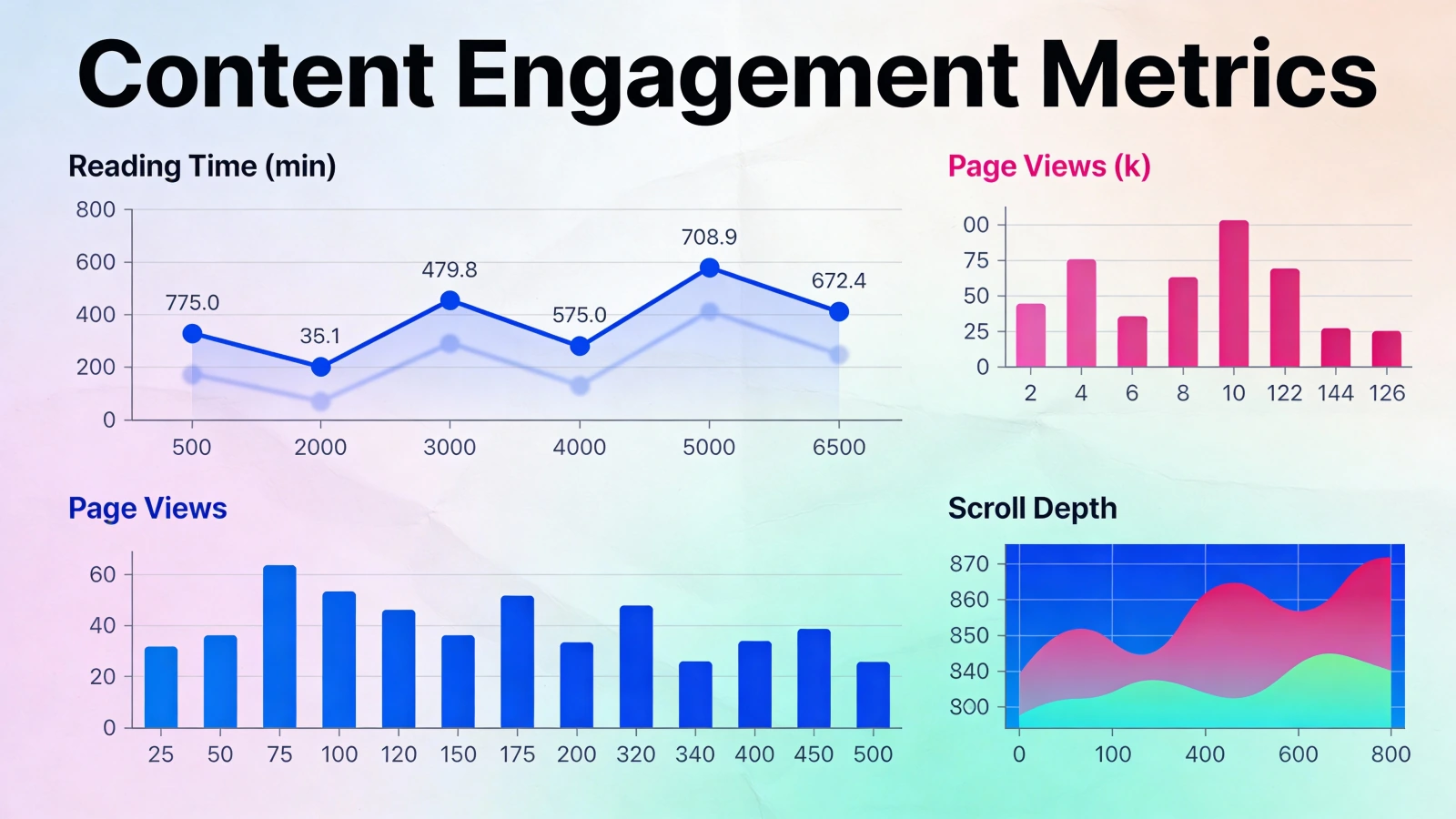
Document analytics tracks how people interact with your documents after you share them. Opens. Time spent. Pages viewed. Scroll depth. Location. Device. All of it.
Think of it like Google Analytics, but for your proposals, presentations, catalogs, and training materials.
When someone opens your document, you know. When they spend 4 minutes on the pricing page, you know. When they bounce after 8 seconds, you know that too.
No more guessing. No more "just following up." You have data now.
Why Traditional PDFs Are Black Boxes
Email tells you if someone opened your message. Websites tell you everything about visitor behavior. But PDFs? Nothing.
You attach a PDF, hit send, and hope for the best. That's been the reality for decades.
Here's what happens with a typical PDF:
- You send it as an attachment
- Maybe they download it
- Maybe they open it
- Maybe they read it
- You have no idea
This blindness creates real problems:
- Sales teams don't know if prospects are engaged or ghosting them.
- Follow-ups happen at random times with generic messaging.
- Hot leads go stale while reps chase cold ones.
According to RAIN Group research, 82% of buyers accept meetings with sellers who proactively reach out, but timing matters. Without document analytics, you're guessing when that outreach should happen.
Cameron Aiton, COO of EverLine, described the frustration well: "We had no way of getting something professional in front of clients, checking how they engaged with it, or tailoring our follow-ups. We also weren't able to accurately track our win/loss ratios."
Marketing teams have the same blind spot. That 40-page ebook you spent months creating? No clue if anyone reads past page 3. HR sends compliance training and has no idea who actually finished it. Reminder emails go to people who already completed it while the actual stragglers fly under the radar.
Everyone is making decisions with zero data. That's the core problem.
Which Metrics Are Worth Watching?
Not all analytics are equal. Some numbers look impressive but tell you nothing. Others seem simple but reveal everything.
Opens and Timing
The most basic metric. Someone opened your document. You know the exact time. Simple, but the implications aren't.
Someone opening your proposal at 9 AM on Monday is probably working. Opening it at 11 PM on Sunday? That's due diligence before a decision. Both are good signs, but they tell you different things about where they are in the process. Research from Chili Piper shows that businesses responding to leads within five minutes are 100x more likely to connect and convert them. Document analytics makes that kind of responsiveness possible.
Time Spent and Pages Viewed
These two work together. How long did they engage, and where did they spend that time?
Say you send a 15-page proposal. The company overview is pages 1-3, solution details run from 4-7, case studies fill 8-10, and pricing covers 11-13. If someone spends 5 minutes on pricing and skips the case studies, they're probably convinced on the solution and focused on budget. Lead with ROI on your follow-up call. If they linger on case studies but bounce at pricing, different story. They need social proof but might have sticker shock.
An 8-second open and close tells you something too. Maybe they weren't ready. Maybe the first page didn't hook them. Maybe they'll come back later. Extended engagement tells you something else entirely: they're interested, they're considering, and they're worth a call.
Scroll Depth
How far did they get? This one is less about individual viewers and more about patterns across many readers.
If everyone drops off at page 6, page 6 has a problem. Maybe it's boring, maybe it's confusing, maybe the document is just too long. This metric helps you improve documents over time. Real data beats assumptions every time.
Return Visits
Multiple visits often signal active consideration. Someone weighing a purchase might review your proposal three or four times. Someone who's moved on won't come back. Return visits also tell you when to reach out. If they just looked at it again after a week of silence, that's your cue.
Location and Device
Location matters for context. If your prospect is based in New York but views your document from London, maybe they're traveling. Or maybe they forwarded it to someone else. That's a different kind of signal entirely.
Device matters for experience. A 50-page PDF on mobile is painful. If most of your viewers are on phones, you need mobile-friendly formatting.
Who Benefits Most from Document Analytics?
Sales Teams: The Obvious Win
Sales is where document analytics earns its keep. Before the follow-up call, you check if they opened it. You see which pages got attention. You know what questions to prepare for.
Someone who spends 12 minutes on your proposal is more engaged than someone who spent 30 seconds. Prioritize accordingly. HubSpot's sales research shows the average close rate across industries is around 29%, but that number jumps significantly when sales reps focus on truly engaged prospects.
The timing piece matters too. Get notified when they open it, reach out while it's fresh. "Hey, saw you had a chance to look at the proposal. Any questions?" feels natural when you call within the hour. If they keep returning to the pricing section, price is the issue. Address it directly instead of dancing around.
After EverLine started using proposal analytics, their COO Cameron Aiton described the shift: "You can check the viewing and dwell time data to find what clients care about. Proposify gives you the data to continue to optimize. We don't guess anymore."
That "we don't guess anymore" is the whole point. For sales teams looking to track proposal engagement specifically, we have a detailed guide on tracking if someone opened your proposal. Sales teams at Flipbooker use analytics to close deals faster.
Marketing and Content Teams
Marketing creates a lot of content. Ebooks, whitepapers, reports, product guides. Most of it disappears into the void. You can measure downloads, but downloads don't tell you if anyone actually read the thing.
Document analytics changes that equation.
- Which pieces get read all the way through?
- Which get abandoned at page 3?
- Which sections correlate with qualified pipeline conversations?
Someone who reads your entire ebook is a more qualified lead than someone who downloaded it and never opened it. Research from Content Marketing Institute shows 73% of B2B marketers use conversions as their top content metric, and engagement data is what predicts conversions. You can also see where people drop off, fix those sections, and test different approaches. Marketing teams at Flipbooker connect content engagement to pipeline.
HR and Training
Training materials present a different problem. It's not about leads or sales. It's about completion. Did everyone finish the required training? Who's been sitting on page 1 for two weeks?
With analytics, you stop blasting reminder emails to everyone and start nudging the specific people who haven't completed it. When the auditor asks for completion records, you have them. Timestamped. And if everyone skips section 3, that tells you section 3 needs a rewrite. HR teams at Flipbooker track training completion without the spreadsheet chaos.
How Document Tracking Actually Works
You don't need to be technical to understand this. Here's the simple version.
Traditional PDFs are files. Static. Dumb. They don't phone home.
Tracked documents are different. They're hosted online and accessed through a unique link. When someone opens the link, the system records it. When they scroll or click, the system records that too.
It works like a website. You're essentially turning your document into a webpage that looks and feels like a document.
The process:
- Upload your PDF or document
- Get a unique tracking link
- Share that link instead of attaching a file
- Track engagement in real-time
For viewers, the experience is smooth. The document opens in their browser. They can flip through pages, zoom in, and read normally. They probably won't even realize it's being tracked.
For you, the experience is eye-opening. You see everything.
What you get:
- Real-time notifications when someone opens
- Time-stamped engagement data
- Page-by-page breakdown
- Total time spent
- Device and location info
No plugins needed. No software to install. It just works.
Our analytics feature page breaks down exactly what Flipbooker tracks and how to access your data.
Privacy Considerations and Compliance
Here's the elephant in the room: Is tracking people ethical?
Short answer: Yes, when done right.
Long answer: It depends on transparency, consent, and data handling.
Be Transparent
People should know their engagement might be tracked. This doesn't mean a scary disclaimer. It can be as simple as hosting documents on a branded platform rather than attaching files.
When someone clicks a link to view a document, they reasonably expect that their visit might be logged. That's how the web works.
Follow Regulations
If you're dealing with GDPR, CCPA, or other privacy laws, document analytics needs to comply. That means:
- Only collecting necessary data
- Storing data securely
- Providing access to data on request
- Deleting data when asked
The ICO's guidance on legitimate interests provides a framework for assessing whether your tracking purposes qualify under GDPR. Good document analytics platforms handle compliance for you. Bad ones don't. Choose carefully.
Don't Be Creepy
Just because you can track something doesn't mean you should mention it. "I noticed you spent 47 seconds on page 8" is creepy. "I wanted to follow up on the pricing section" is fine.
Use analytics to inform your approach, not to prove you're watching.
Flipbooker's privacy features are built with compliance in mind. We track what matters and protect what shouldn't be shared.
Turning Insights Into Action
Data without action is just noise. The whole point of tracking is doing something with what you learn.
Create Response Triggers
Set up notifications for specific behaviors:
- Immediate open: high near-term interest.
- Heavy time on pricing pages: budget is top of mind.
- Multiple views over several days: active consideration.
- New viewer appears: additional stakeholder entered the deal.
As Cameron Aiton put it after EverLine built this into their process: "We can strike while the iron is hot and tailor our follow-ups based on how the clients have engaged with the proposal."
Build Follow-Up Templates
Create templates matched to engagement patterns:
High engagement, no response: "Hi Name, I saw you had a chance to review the proposal in detail. Happy to hop on a quick call to answer any questions. What does your Thursday look like?"
Quick view, then silence: "Hi Name, wanted to make sure the proposal didn't get buried in your inbox. I've attached a 1-page summary of the key points. Let me know if you'd like to discuss."
Return visitor: "Hi Name, checking in since I know the proposal is on your radar. If timing has changed or you need additional information, I'm here. Just say the word."
Score and Prioritize Leads
Not all opens are equal. A simple scoring model helps:
- Opened once: low weight.
- Meaningful dwell time: medium weight.
- Pricing-section engagement: higher weight.
- Return visits or forwarding: highest weight.
High scorers get priority outreach. Low scorers get automated nurture. Zeroes get one more touch before you archive them.
The specifics depend on your sales cycle. A short transactional sale might weigh "viewed pricing" heavily. A longer enterprise deal might weight return visits and forwarding more. The point is to move beyond "they opened it" toward "they're actively considering it."
Improve Your Documents
Analytics also reveal content problems. If everyone drops off at a specific page, that page needs work. If sections get consistently skipped, cut them or move them. If readers spend disproportionate time on pricing, maybe you need to lead with value earlier. And if people open the document and leave within seconds, your first page isn't doing its job.
Use this data to iterate. Test different versions. Measure again. Over time, your documents get better because you're working with evidence instead of gut feel.
Making It Work: From Random Tracking to Actual Strategy
Tracking documents without a plan is just data collection. The value comes from connecting engagement data to decisions.
Start by picking the right documents to track. Not everything needs analytics.
Track aggressively:
- Sales proposals
- Contract renewals
- Product catalogs
- Training materials
- Investor decks
Skip or lightly track:
- Internal memos
- Casual updates with no downstream action
The platform you choose matters. You need real-time notifications, page-level analytics, link-based sharing (not attachments), mobile-friendly viewing, CRM integration, and privacy compliance. Flipbooker does all of this. That's why we built it.
Before you start trying to improve anything, figure out where you're starting. What's your average time-spent today? What's your typical completion rate? Where do most people drop off? These baseline numbers are your benchmarks. Without them, you won't know if changes are working.
Then connect the data to workflows. When someone opens a proposal, who gets notified? When engagement crosses a threshold, what happens? The gap between "we have analytics" and "analytics actually help us close deals" is entirely about whether the data triggers action or just sits in a dashboard.
And review it regularly. A monthly look at which documents performed best, which got ignored, and what patterns emerged will tell you more about your content than any amount of guessing. Analytics without review is just a number going up.
The Shift That's Already Happening
The trajectory here is clear. CRM integrations are getting tighter, so engagement data flows directly into sales pipelines. Documents are becoming more interactive, with embedded video and clickable elements that generate even richer tracking data. And AI is starting to predict likelihood to respond based on engagement patterns.
But you don't need to wait for any of that. The basics work today. Know who opened it. Know what they read. Act accordingly.
If you're still sending PDFs as email attachments, you're flying blind. Upload a document, share a link, see who reads it. The data will change how you follow up, how you prioritize, and how you close.
Flipbooker shows you exactly who's reading your content, which pages grab attention, and when to reach out. Try it free and see the difference data makes.
FAQs
What is document analytics?
Document analytics tracks how people interact with your documents after you share them. Opens, time spent, pages viewed, scroll depth, device, and location. Think of it like website analytics, but for your proposals, catalogs, and training materials.
Can you track a PDF after you send it?
Not if you send it as an email attachment. PDFs are static files that don't report back. To track engagement, you need to host the document online and share a link instead. The viewer opens it in their browser, and the system records their behavior.
Is tracking document views legal under GDPR?
Yes, when done properly. The ICO's guidance on legitimate interests provides a framework. You need to collect only necessary data, store it securely, and delete it on request. Most reputable document analytics platforms handle compliance for you.
What's the most useful metric in document analytics?
Pages viewed. Knowing which sections someone spent time on tells you what they care about. If a prospect lingers on pricing but skips case studies, that changes your entire follow-up conversation.
Does document tracking work on mobile?
Yes. Since tracked documents open in a browser, they work on any device. You'll also see which device the viewer used, which is useful context for formatting decisions.